
A social post earns a strong response.
The obvious next move seems to be turning it into a blog.
Sometimes that is the right decision. Sometimes the post worked because of its timing, format or entertainment value, and a longer article would add very little.
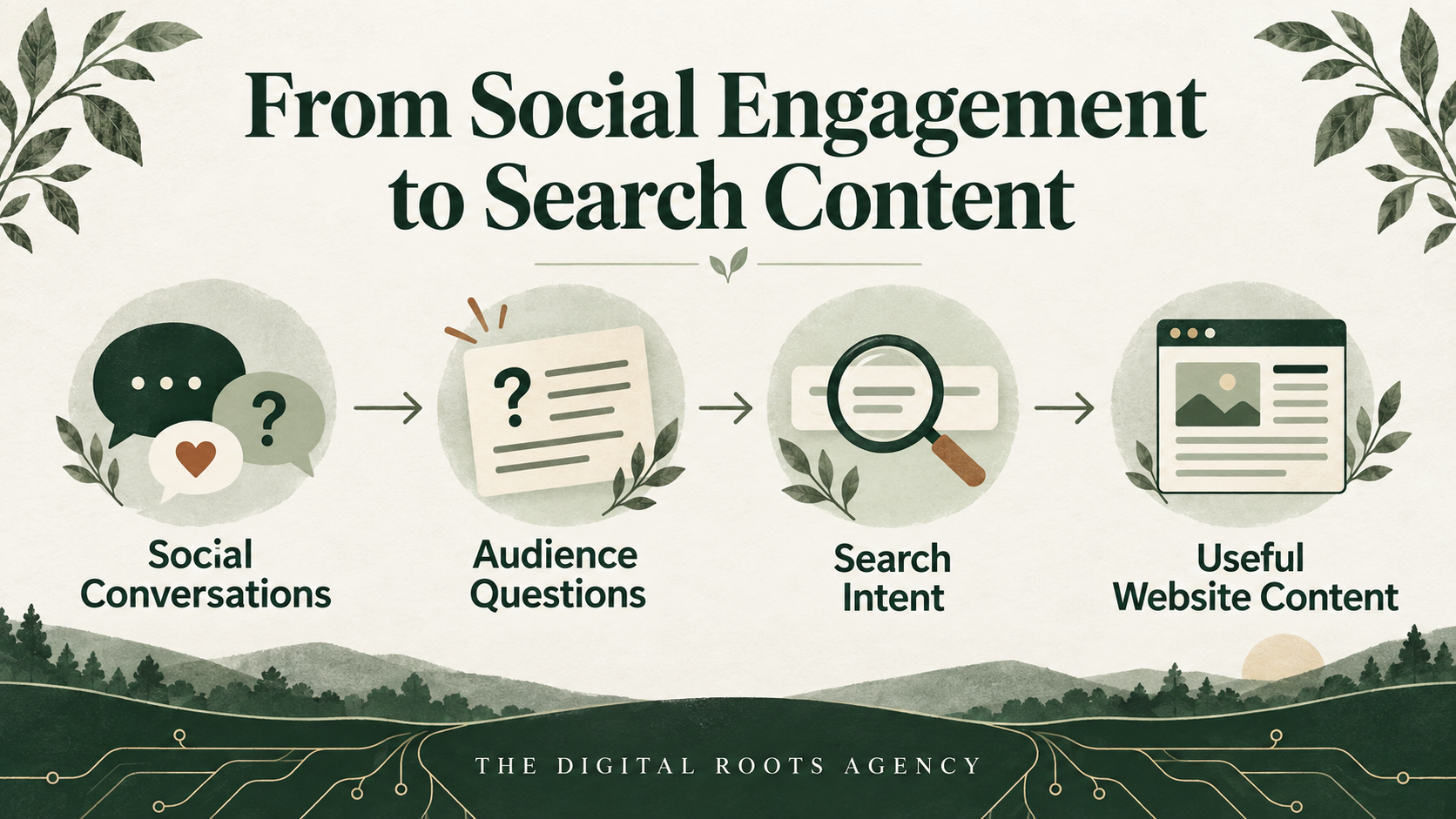
A useful social media and SEO content strategy uses audience conversations to discover questions, then evaluates whether a website resource would help answer them.
The social response begins the investigation. It does not finish it.
Look Beyond the Total Engagement Count
Read the responses before choosing the topic.
A post may generate agreement without revealing an unanswered need. Another may reach fewer people but produce specific questions from the audience your business serves.
Distinguish among:
- Reactions that show recognition or interest.
- Comments asking for an explanation.
- Questions about applying the idea.
- Requests to compare options.
- Clicks to a related resource.
- Inquiries about receiving help.
These signals mean different things. Do not treat them as interchangeable or assume a platform measures them the same way as another platform.
Identify Who Is Responding
A large audience is useful only in context.
A dealership marketing article may attract industry peers, vendors, car enthusiasts and potential clients. Their interests can overlap, but their buying needs differ.
Ask whether the conversation involves the people you intend to help.
Use information people have chosen to make public and focus on the substance of the discussion. Avoid inferring sensitive characteristics or turning private messages into identifiable examples.
The goal is a better understanding of the question, not a profile of an individual.
Extract the Durable Question
Separate the underlying question from the social hook.
A post about a surprising AI answer might prompt a more durable question: “How should a business test whether its information is represented accurately?”
A post about a frustrating website experience might point to “What information should a service page include before asking someone to book?”
Those questions can remain useful after the original post stops circulating.
Write the question in one sentence. Then write what the page would help the reader understand or do.
If you cannot describe the added value, keep the idea in the research backlog.
Check the Website Before Creating Anything
Search your own content for an existing answer.
The social conversation may reveal that a useful article needs a better example or clearer explanation. It may also show that people do not know the resource exists.
In that case, improve and distribute the existing page.
A new URL is appropriate when the question has a distinct purpose that current content does not address.
The decision should depend on the answer people need rather than the fact that the idea originated on a different channel.
Compare Social Interest With Search Evidence
Review related queries and pages in your available search reporting. Use keyword research, when available, as another input.
Do not expect a social comment to appear word for word in search data.
Look for related needs, language and situations. A highly specific question may have limited visible data but still be valuable to prospective customers.
Conversely, a broad popular phrase may have weak relevance to the service you provide.
When evidence is limited, describe the opportunity internally as a hypothesis. Publish a useful answer because it serves the audience, then evaluate what happens.
Choose the Right Content Format
A blog is one possible destination.
A question about availability may belong on a service page. A repeated objection may deserve a comparison guide. A quick clarification may fit an existing FAQ.
Consider this hypothetical example:
A local service company publishes a post about preparing for an appointment. Readers repeatedly ask what they need to move or secure beforehand.
The company might create one reviewed preparation guide, link to it from confirmation messages and share short reminders socially.
That resource can support customers through several channels. Its value is not limited to whether it becomes a high-traffic blog.
Add Substance Beyond the Original Post
A website article should do more than stretch the caption.
Add the details required to act: examples, decision criteria, limitations and a clear next step.
If the post introduced a debate, explain the circumstances that change the answer. If it showed a process, clarify the steps and who is responsible.
Google’s helpful-content guidance favors material that provides value to the intended reader. Repackaging a short observation without useful substance does little to meet that aim.
Close the Loop With Clear Measurement
When sharing the resource externally, use consistent campaign parameters if you need to distinguish the source and campaign in analytics. Google documents how those parameters support campaign reporting.
Compare the behavior of visitors arriving from social posts with other relevant audiences, while recognizing that attribution is incomplete.
Review whether readers use the resource, visit a relevant service page or submit a qualified inquiry.
Do not declare the page successful based solely on the original post’s reach. The new resource has its own purpose and needs its own evaluation.
Frequently Asked Questions
Does a popular post prove a keyword has search demand?
No. It indicates a response in a particular social context. Search demand requires separate investigation.
Should I turn every successful post into a blog?
No. First determine whether a longer or more permanent answer would help and whether the website already provides it.
Can I reuse my own social content?
Yes, but adapt it to the page’s purpose and add the substance a website reader needs.
What if search data is limited?
Use customer relevance, recurring questions and your expertise to make a measured decision. Avoid presenting an untested idea as a proven opportunity.
How should I measure the resulting article?
Assess its intended outcome: useful reading, next-step visits, completed actions or customer support value. Keep social reach as a separate measure.
Let Audience Conversations Improve the Website
Social channels can reveal where people are curious, confused or ready to learn more.
Use those conversations to build resources that remain useful after the feed moves on.
Sources Used
- Google Search Central — Creating Helpful, Reliable, People-First Content
- Google Analytics — Collect Campaign Data With Custom URLs
Connect Audience Interest With Search Strategy
The Digital Roots Agency helps businesses connect content, search visibility and relevant customer action. Visit our SEO and AI visibility blog for more practical guidance.
Build on the questions your audience keeps coming back to.