
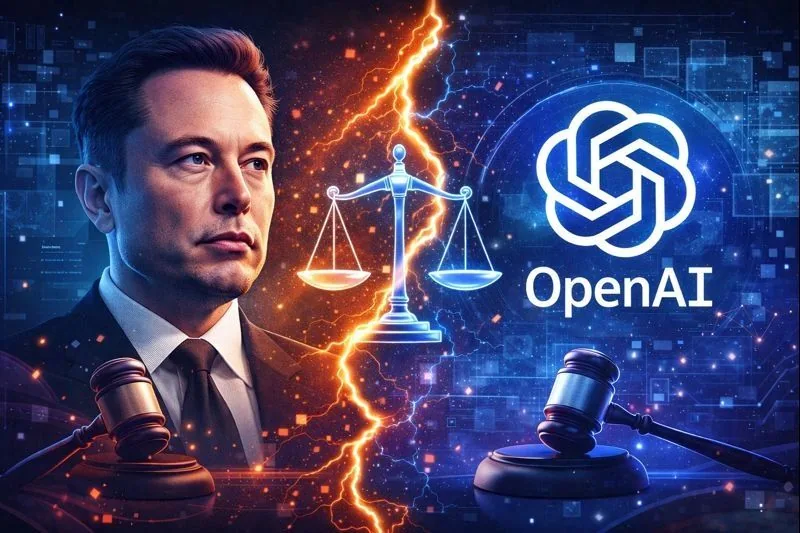
Elon Musk vs OpenAI: Why This Lawsuit Signals a New Era for Search—and Why Generative Engine Optimization Matters More Than Ever
The digital marketing landscape is changing faster than at any point since the birth of Google. Traditional SEO is no longer the only battleground for visibility. AI-driven answer engines, large language models, and generative search experiences are rapidly reshaping how people discover businesses, services, and brands online.
At the center of this shift is the very public lawsuit filed by Elon Musk against OpenAI—a legal battle that is about far more than corporate governance. It is a warning flare for businesses everywhere: AI now controls the front door to discovery.
And if your business isn’t optimizing for that reality, you’re already behind.
A Lawsuit That Exposes the Power Shift in Search
While headlines focus on contracts, nonprofit status, and corporate control, the deeper implication of the Musk–OpenAI lawsuit is this:
AI models now decide what information gets surfaced, summarized, and recommended—often without users ever clicking a website.
Search engines are evolving into answer engines. Instead of ten blue links, users receive synthesized responses generated from thousands of data points. These AI systems determine:
Which brands are mentioned.
Which businesses are cited as authorities.
Which solutions are recommended—and which are ignored.
This is not theoretical. It’s happening now across generative search experiences, AI chat interfaces, and smart assistants.
From SEO to GEO: The Next Evolution of Visibility
Traditional Search Engine Optimization (SEO) focuses on ranking web pages.
Generative Engine Optimization (GEO) focuses on something far more powerful:
Training AI systems to understand, trust, and reference your brand.
Generative engines don’t just crawl keywords—they evaluate:
Topical authority.
Entity relationships.
Semantic consistency
Brand credibility across the web.
Structured and unstructured data signals.
If your brand is not optimized for these factors, AI models may never mention you—even if you rank well on Google today.
Why the OpenAI Lawsuit Makes GEO a Business Imperative
The Musk lawsuit highlights a crucial truth: AI platforms are becoming gatekeepers. Whoever controls the models controls the narrative.
For businesses, this means:
Your website alone is no longer enough.
Rankings don’t guarantee visibility.
Brand mentions matter more than backlinks.
Authority is evaluated holistically, not page-by-page.
Generative engines pull from:
Your website content.
Blog depth and clarity.
Schema and structured data
Reviews, citations, and brand mentions.
Consistency across digital ecosystems.
This is exactly where most businesses fall short.
How The Digital Roots Agency Helps Businesses Stay Ahead
At The Digital Roots Agency, we don’t just react to algorithm changes—we build strategies for what’s coming next.
Our approach blends SEO + GEO into a future-proof visibility framework.
Generative Engine Optimization (GEO)
We optimize your digital presence so AI systems:
Understand what you do
Trust your expertise
Reference your brand in generated answers
This includes:
Entity-based content structuring.
Semantic topic clustering.
AI-readable authority signals.
Brand narrative alignment across platforms.
Advanced SEO That Feeds AI
Modern SEO isn’t dead—it’s evolved.
We ensure your SEO strategy:
Supports AI ingestion.
Strengthens topical authority.
Builds long-term trust signals.
Converts human users and machine readers.
Content Built for Humans
and Models
We create content that:
Answers real user intent.
Aligns with generative search logic.
Positions your brand as a primary source—not filler.
Future-Focused Digital Strategy
While others chase rankings, we focus on recommendation equity—making sure your business is the one AI systems suggest when it matters most.
GEO and SEO Keywords Embedded for Maximum Reach
This strategy naturally targets high-intent phrases such as:
Generative Engine Optimization services.
GEO vs SEO strategy.
AI search optimization.
Optimize content for AI search.
Future of SEO and AI.
Digital marketing for AI search engines.
How to rank in generative search.
These are the queries businesses are just starting to ask—and you can be the answer.
The Real Takeaway for Business Owners
The Musk–OpenAI lawsuit isn’t just tech drama—it’s a preview of the next digital power structure.
AI will increasingly decide who gets visibility.
Brands without authority will disappear from answers.
Businesses optimized only for yesterday’s SEO will lose tomorrow’s customers.
The winners will be those who adapt early.
Final Thought: Don’t Optimize for Yesterday’s Internet
Search is no longer just about clicks.
It’s about being included in the answer.
At The Digital Roots Agency, we help businesses build visibility that survives algorithm shifts, platform changes, and AI dominance—so when generative engines decide who matters, your brand is already there.
If you’re ready to move beyond traditional SEO and future-proof your digital presence, now is the time.