
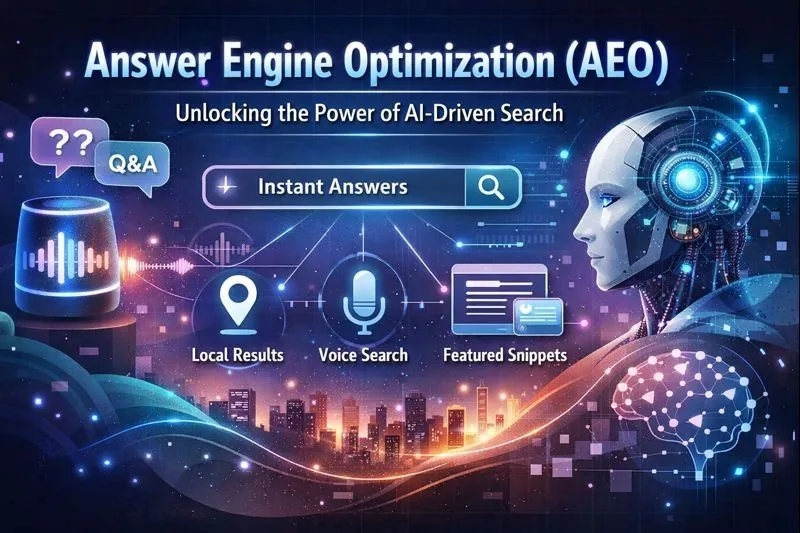
Answer Engine Optimization (AEO) is transforming how people find information online. Instead of ranking content based solely on keywords, AEO focuses on delivering clear, context-rich answers that match user intent—especially for conversational, voice, and AI-driven searches.
Unlike traditional SEO, which relies heavily on backlinks and keyword density, AEO leverages artificial intelligence to understand why someone is searching and provide the most relevant response. This makes AEO particularly powerful for local businesses in New York and across the United States, where search visibility increasingly depends on AI summaries and voice assistants.
What is Answer Engine Optimization (AEO)?
Answer Engine Optimization is the practice of structuring website content so AI-powered search engines such as voice assistants and generative search platforms can quickly extract and deliver direct, accurate answers to user questions.
How AEO Differs From Traditional SEO
AEO goes beyond classic SEO tactics by prioritizing user intent and conversational relevance. Effective AEO content:
- Addresses user intent clearly by providing direct, actionable answers
- Enhances local engagement through geographic and contextual signals
- Adapts to AI-driven search behavior by aligning with natural language queries
By focusing on how people ask questions rather than just what they type, AEO ensures your content remains visible in modern search experiences.
Essential Steps to Optimize Your Content for AEO
Optimizing for Answer Engine Optimization helps search engines and AI tools understand and surface your content more effectively.
1. Analyze Natural Language Patterns
- Identify common conversational phrases and question formats
- Write content that mirrors how users naturally speak, especially for voice search
- Incorporate regional phrasing relevant to New York and local U.S. markets
2. Implement Structured Data
- Use schema markup to define FAQs, services, events, and products
- Include location-specific signals to strengthen local relevance
- Help AI engines confidently extract answers from your site
3. Optimize for Voice Search
- Provide concise, direct answers to common questions
- Ensure your website is mobile-friendly and fast-loading
- Structure content so responses can be read aloud clearly
Tip: Regularly update content based on evolving search behavior and real user questions to stay competitive in AI-driven results.
Voice Search and AEO: Why It Matters
Voice search and AI-powered queries are reshaping how content is discovered. Users increasingly expect fast, conversational answers, making AEO essential for long-term visibility.
To maximize AEO performance:
- Use conversational language that feels natural and clear
- Optimize for common voice-search triggers and questions
- Reinforce local relevance with city, state, or regional cues
- Prioritize mobile performance and page speed
This approach positions your website to capture traffic from both traditional search engines and AI-driven answer platforms.
Common AEO Challenges (and How to Fix Them)
Many businesses struggle to adapt existing content for AEO. Common hurdles include overly formal language, weak local signals, and slow site performance.
How to Overcome These Challenges
- Revise content into question-and-answer formats
- Improve technical performance, including load speed and mobile usability
- Integrate local keywords naturally, such as city names and service areas
These adjustments help AI engines interpret your content more accurately and deliver it to the right audience.
Frequently Asked Questions About Answer Engine Optimization
Quick Answer: Is Answer Engine Optimization worth it?
Yes. AEO improves visibility in AI-powered search results, voice assistants, and featured snippets by delivering precise, intent-focused answers—especially for service-based and local businesses.
What is Answer Engine Optimization (AEO)?
AEO focuses on structuring content so AI-driven search engines can deliver clear, context-based answers to conversational queries.
How does AEO differ from traditional SEO?
While SEO prioritizes rankings and keywords, AEO emphasizes direct answers, voice search readiness, and user intent.
How can businesses improve their AEO strategy?
Use natural language, optimize FAQ sections, implement structured data, and regularly audit content for clarity and relevance.
Why is local optimization important for AEO?
Geographic signals help AI engines deliver answers that are relevant to users searching for nearby solutions, especially in competitive regions like New York.
Final Thoughts: Why AEO Matters for Modern SEO
Answer Engine Optimization represents the next evolution of search visibility. By aligning content with how users ask questions—and how AI delivers answers—AEO creates a more intuitive and engaging digital experience.
Key benefits include:
- Higher relevance in AI-driven search results
- Improved user experience through clear, direct answers
- Stronger local visibility with geographic optimization
At Digital Roots Agency, we help businesses implement AEO, GEO, and SEO strategies that ensure they’re visible not just in search engines—but in the AI-powered answers that influence real decisions.
By auditing your content, refining for user intent, and embracing AI-first optimization, your website can become a trusted resource in the future of search.