
Your next useful blog topic may already be sitting in a sales conversation.
A prospect asks what is included. A customer wants to understand the process. Someone hesitates because they cannot tell which option is right for them.
Those questions reveal the information people need before they feel ready to act.
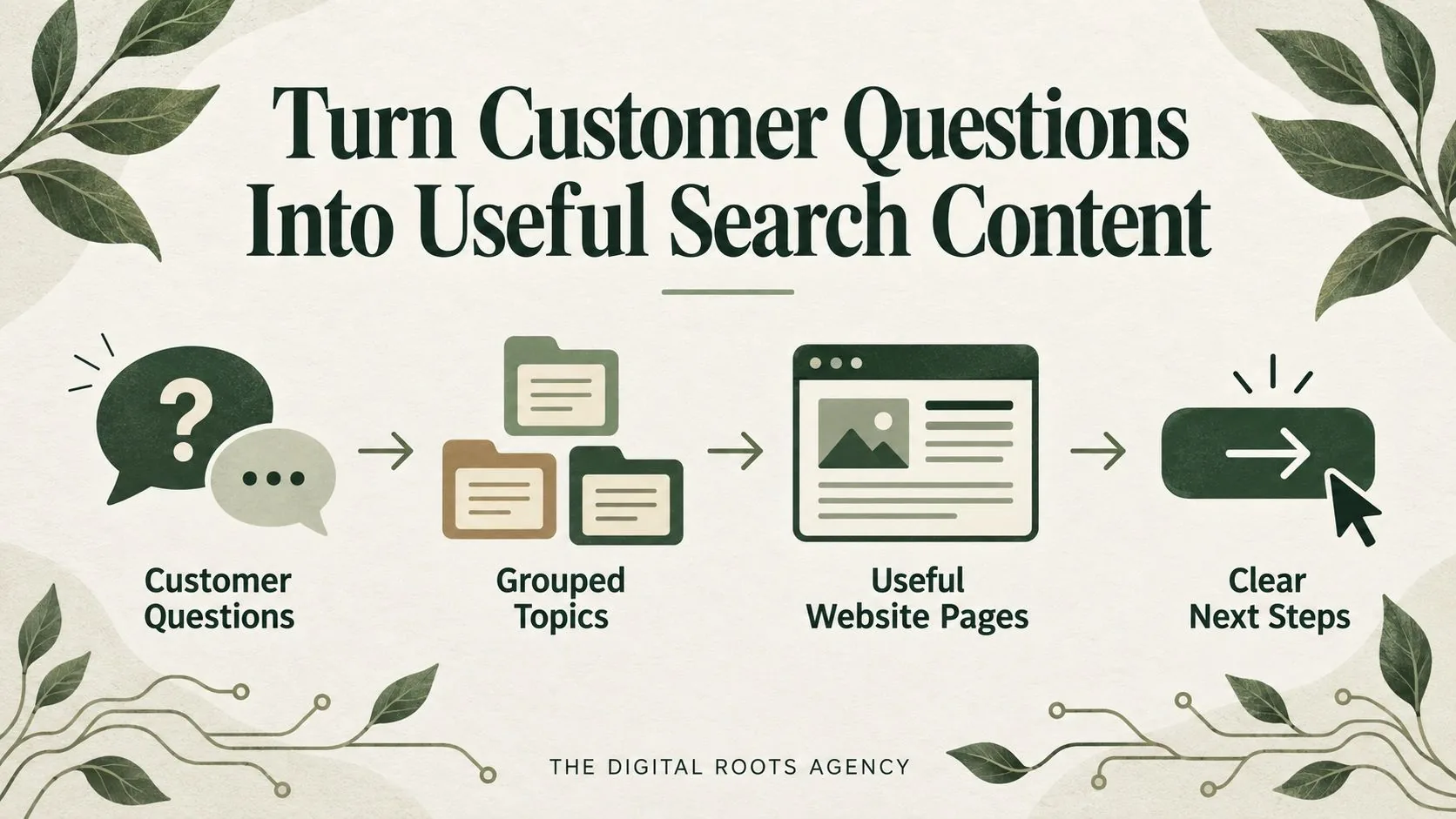
A question-based content strategy turns recurring audience needs into organized, useful answers across your website. It gives each page a clear purpose and helps your team write from real experience.
Listen Before You Build the Calendar
Ask the people who speak with customers to bring examples of questions they answer repeatedly.
Useful sources include:
- Sales and discovery calls.
- Customer-support conversations.
- Contact forms and email inquiries.
- Questions raised during consultations.
- Public comments on your social posts.
- Internal site-search terms, if available.
Remove names and other identifying details. The goal is to understand the question, not publish a customer’s private conversation.
Also record who asked and when the issue arose. A first-time buyer needs a different explanation from a returning client evaluating a more advanced service.
Capture the Wording and the Concern
Consider the question, “How long does this take?”
The literal answer might be a timeline. The underlying concern could be business disruption, staffing, a deadline or uncertainty about when progress becomes visible.
A useful article should explain the factors that affect the timeline, what the customer can do to prepare and what happens next.
It should not invent a universal completion date to make the answer sound simple.
For an agency, “When will SEO work?” might lead to an explanation of dependencies and measurement. For a service business, “How long will the appointment take?” may belong directly on a service page.
The question helps you identify the need. Editorial judgment determines the best answer.
Group Questions Into a Customer Journey
Organize the questions around decisions rather than an alphabetical list of terms.
Understanding the Problem
These readers want to identify what is happening. They need definitions, symptoms and distinctions.
A practical article might explain why website traffic and qualified inquiries can move in different directions.
Evaluating the Options
These readers want to compare approaches. Explain suitability, tradeoffs and the circumstances that change the recommendation.
Avoid declaring one option the best for everyone when the answer depends on the situation.
Preparing to Act
These readers want to know what they need, how the process works and what to expect.
A service page, preparation guide or short FAQ may serve them better than another general blog.
Getting More From an Existing Service
Current customers also need useful information. Onboarding questions and recurring support needs can become durable resources.
Their value may appear in better preparation or fewer repeated explanations as well as search traffic.
Decide Where Each Answer Belongs
Do not turn every question into a new article.
A short answer can strengthen an existing page. Several related questions may form one guide. A complex decision may deserve a dedicated comparison.
For example, an automotive service page can answer basic scheduling questions, while a separate guide explains how to prepare for a service visit.
The two pages have different jobs.
Before drafting, write one sentence describing what the reader will understand or be able to do afterward. If two proposed articles have the same sentence, review whether they should be combined.
Use a Simple Brief Your Team Can Follow
A useful brief includes:
- The reader and the situation prompting the question.
- The primary question in familiar language.
- A direct answer.
- Supporting questions or exceptions.
- An example from genuine experience, with permission where needed.
- A relevant existing resource to link to.
- The next action that makes sense.
This is an editorial tool, not a requirement imposed by a search engine.
It keeps the writing focused and helps subject-matter experts identify missing nuance before publication.
Write the Answer Before the Sales Pitch
Open with the explanation the reader came for.
Then show how it works, where the limits are and which details change the answer. Introduce your service when it becomes relevant to the problem.
Google’s people-first content guidance emphasizes usefulness for the intended audience. A page that exists mainly to repeat a keyword misses that purpose.
For example, an article explaining an audit should describe what gets reviewed and how findings become priorities. It can then explain how your team helps with that work.
The reader should leave with something useful even if they do not submit a form.
Review Answers With the People Doing the Work
Ask an appropriate team member to check the draft.
Can the business deliver the process described? Are the examples accurate? Does a sentence promise something that varies by customer or location?
For regulated, medical or legal subjects, obtain the appropriate professional review before publication. Marketing clarity should not erase important qualifications.
Keep a note of what may change, such as service availability or process details, and assign someone to maintain it.
Measure Whether the Resource Helps
Review the search queries associated with the page and whether readers continue to relevant resources or complete useful actions.
Ask the sales team whether prospects are arriving better informed.
Low traffic alone does not prove a resource has no value. A page that answers a specialized buying question may support fewer people with a stronger need.
Equally, a high visit count does not prove the article helps the business.
Frequently Asked Questions
Are customer questions the same as keywords?
They can reveal useful keyword language, but they also provide context about intent and uncertainty. Use both when planning the answer.
Should every blog include FAQs?
Include them when they address genuine follow-up questions. Avoid adding an FAQ section that only repeats the article word for word.
Can AI help organize the questions?
It can help group an anonymized list or suggest an outline. A knowledgeable person should check the grouping, facts and final advice.
How do I choose the first question to answer?
Start with a recurring, relevant question your team can answer well and your website does not already address clearly.
Can these answers also support social content?
Yes. A useful explanation can become a short post that directs interested readers to the complete resource.
Turn Repeated Questions Into Lasting Value
Every time your team explains the same issue, you learn something about what the website could make clearer.
Capture that knowledge and give it a useful home.
Sources Used
Make Your Expertise Easier to Find
The Digital Roots Agency helps businesses translate expertise into clear content for search and AI discovery. Explore more practical guidance in our SEO and AI visibility blog.
The questions your customers ask are a strong place to start growing.