
A business owner sees a competitor mentioned in an AI-generated answer and asks an understandable question:
“What keywords do we need to use to show up there?”
The answer starts before the keyword list.
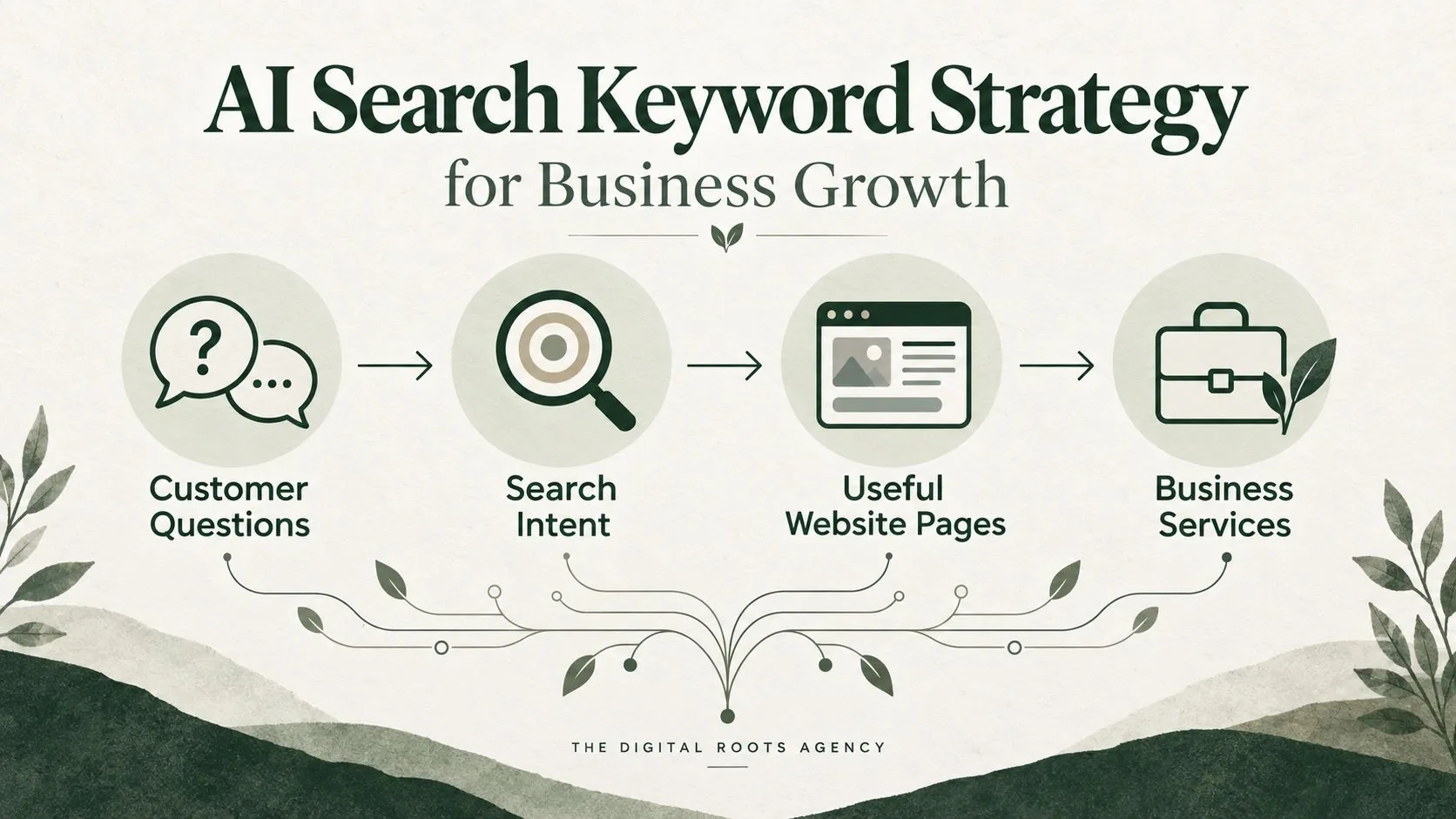
You need to understand what the customer is trying to accomplish, whether your business can help, and which page makes that connection clear.
An AI search keyword strategy is a plan for choosing and organizing the language, questions and topics your audience uses when researching a decision. It should support useful pages for people searching through both traditional results and conversational tools.
The objective is to earn attention from people whose needs match your expertise.
Start With the Business Decision
Before opening a keyword tool, write down the services you want to grow and the customers those services help.
A dealership may want more service appointments. A publisher may want more advertiser inquiries. A local service company may want more requests from the communities it actually serves.
Each goal suggests a different set of questions.
A service customer might ask whether a particular repair is available. An advertiser might ask which publication reaches a specific audience. A homeowner might compare providers before requesting an estimate.
If your keyword list cannot connect back to a real customer decision, it will be difficult to judge whether the content is working.
What Changes When Search Becomes Conversational?
A short search phrase may become a longer request containing location, preferences, constraints and follow-up questions.
That makes context useful. It does not mean every conversational variation needs its own page.
Google’s guidance on AI features says established SEO practices remain relevant and no special optimization is required for AI Overviews or AI Mode. There is no separate set of magic phrases that guarantees inclusion.
Treat conversational questions as a way to understand the reader more precisely.
For example, “dealership service” is broad. “Can I schedule service at a dealership if I bought my car elsewhere?” exposes a specific concern a service department can address.
The second question can strengthen an existing service page without becoming a separate article.
Build a Shortlist From Three Sources
1. Questions Customers Already Ask
Review sales conversations, contact forms and recurring questions raised with your team. Remove personal information and capture the underlying need.
Pay attention to language people use before they know your industry terminology.
A prospect may say “Why can’t people find us?” when a marketer would describe a visibility or discoverability problem. Both expressions belong in your research.
2. Search Queries Connected to Your Website
Use Search Console to examine queries and the pages associated with them. Its performance reporting includes clicks, impressions, click-through rate and average position.
Look for patterns worth investigating, not isolated movements.
A relevant query with impressions and limited clicks might indicate an opportunity, but the reason could involve the result’s position, its presentation or the search itself. Inspect the page and results before deciding the answer is more content.
3. Substantive Social Conversations
A comment that asks how something works can reveal an unanswered question. Repeated objections may suggest a comparison article.
Record the question, the audience and the context. A popular post can reach people who will never buy your service, so engagement alone should not determine your publishing priorities.
Group Keywords by the Answer People Need
Separate keywords into practical intent groups:
- Understanding: “What is AI visibility?”
- Diagnosis: “Why is my business missing from AI search?”
- Comparison: “SEO audit vs AI visibility audit.”
- Action: “AI visibility services for dealerships.”
These are illustrative examples, not verified demand estimates.
Next, ask whether the terms need essentially the same answer. Closely related wording can usually be addressed together when the audience and task are the same.
A service page and an educational guide may cover related language while serving different needs. Their distinction should be obvious to a reader.
Give Every Priority Topic a Home
Assign each topic to an existing or proposed page.
Document its primary question, intended reader, supporting questions and next step. Identify related pages that can help the visitor continue learning.
Before creating a new URL, read what you already have. An existing article may need a clearer introduction, an example or an updated section.
For a broader industry example, our article on what AI search changed for dealerships introduces the relationship between automotive content and changing discovery habits.
The new article should add a distinct answer to that foundation.
Prioritize Usefulness and Business Fit
For each proposed topic, ask:
- Does it address a real question from the audience we serve?
- Can we contribute firsthand knowledge or a helpful example?
- Does an existing page already answer it?
- Is there evidence of interest beyond our own preference?
- Is there a relevant next step for the reader?
Use those answers to choose a manageable set of topics. Keyword volume can inform the decision when available, but a large estimate does not make an unrelated topic valuable.
Keep claims proportional to the evidence. A promising question is an opportunity to investigate, not proof that a page will rank.
Frequently Asked Questions
Do AI search keywords differ from SEO keywords?
They often overlap. Conversational searches may provide more context, so research should include audience questions and constraints alongside shorter phrases.
Should every keyword have its own page?
No. Group wording that serves the same reader need. Create separate pages when the answer, audience or task is meaningfully different.
Can keywords guarantee an AI citation?
No. A phrase in a title or paragraph does not guarantee that a platform will select or cite the page.
What if my website has very little search data?
Start with customer questions, your services and a review of existing content. Treat early priorities as hypotheses and refine them as evidence accumulates.
How often should I review the keyword plan?
A monthly review is a practical starting point. Revisit it sooner when services, customer needs or the underlying information change.
Build Your Strategy Around the Questions You Can Answer Well
A useful keyword plan gives your team direction. It explains who each page serves, what it answers and why it belongs on the website.
That clarity makes writing easier and performance easier to assess.
Sources Used
Find Your Next Visibility Opportunity
The Digital Roots Agency helps businesses connect SEO, AEO and GEO with clear content and relevant customer needs. Start by examining how your business presents its expertise across search.
Review Your AI Search Readiness
Strong digital roots begin with a clear understanding of the people you serve.